
Reviewed by Restorex’s building restoration team
Look beyond the missing slate
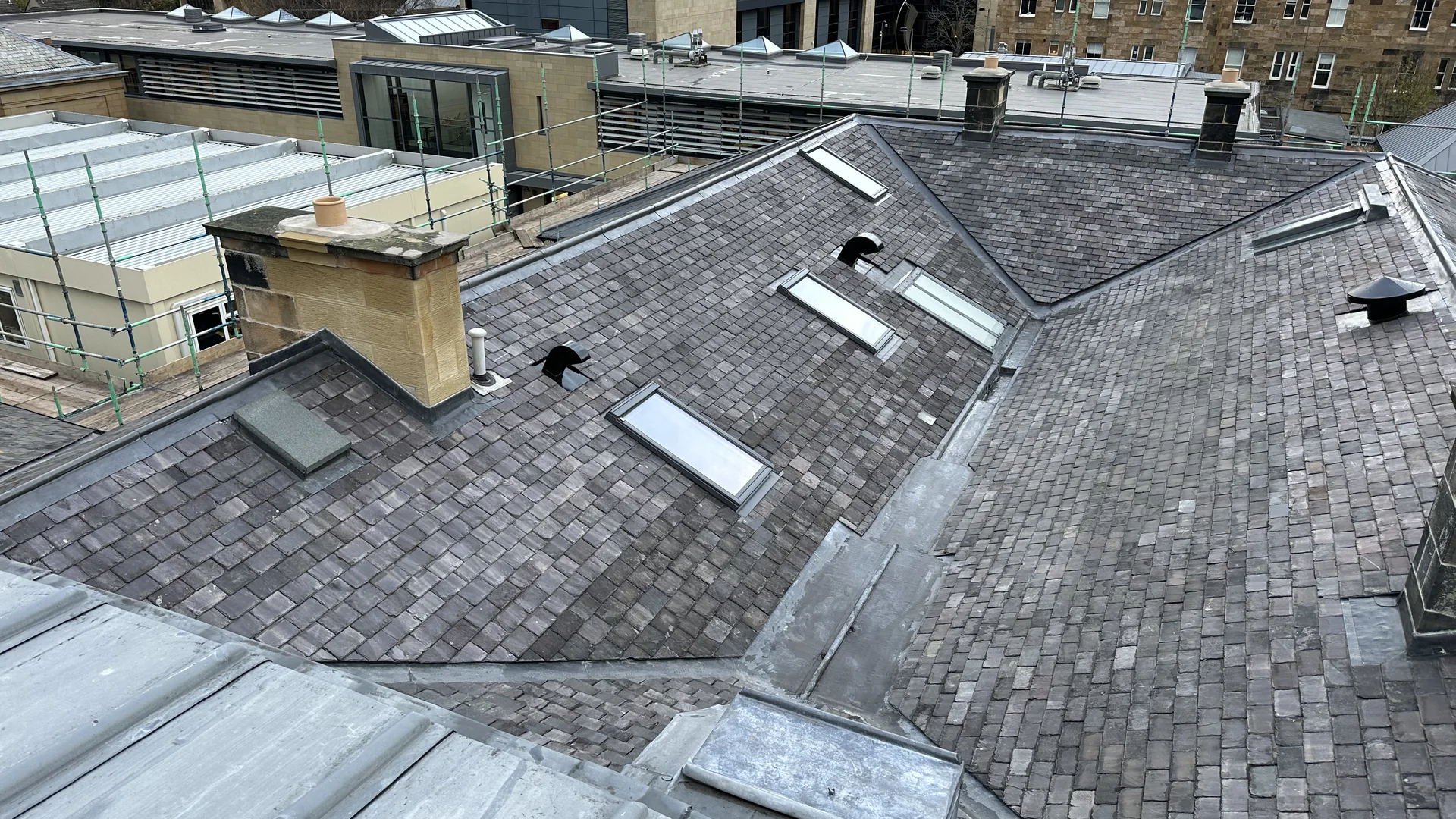
A visible slipped slate may be an isolated failure or a symptom of widespread fixing fatigue. Assessment should consider slate condition, nail sickness, previous repairs, underlay, battens, ventilation, valleys, ridges, skews, chimneys, leadwork and the condition of supporting timber where it can be inspected.
Internal staining is useful evidence but does not always identify the entry point. Water can travel along underlays, rafters and masonry before appearing inside.
Understand what can be retained
Sound traditional slate can often be carefully stripped, graded and reused. The likely recovery rate should be assessed realistically, with compatible replacement slate allowed for. Decisions should also consider the roof geometry and whether repeated local intervention is becoming less economical than a planned renewal.
Opening-up may reveal concealed decay or earlier alterations that could not be confirmed during the initial survey. A good scope states these limitations and provides a clear mechanism for recording and agreeing necessary changes.
Treat the roof as one envelope
Renewing slate while leaving defective lead gutters, unstable chimneys or failed skew details can preserve the original leak. Restorex coordinates roofing, leadwork and masonry so vulnerable junctions are resolved within one weatherproofing strategy.