
Reviewed by Restorex’s building restoration team
The visible stain may have several causes
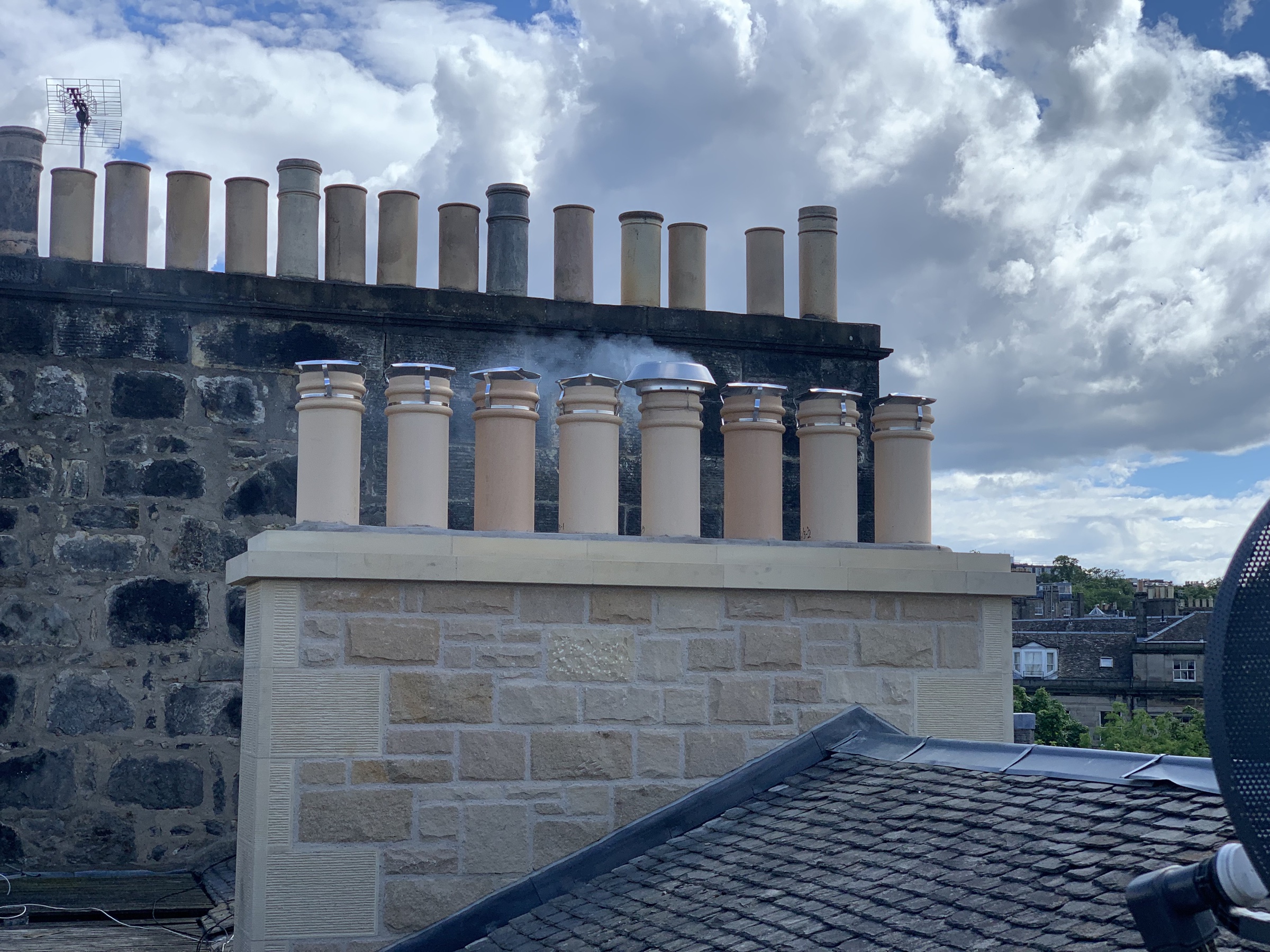
Traditional chimneys combine exposed masonry, flues, cope stones, pots, mortar joints, flashings and roof junctions. Water may enter through open joints, cracked copes, failed flaunching, porous masonry, defective leadwork or displaced slate. Condensation and unused flues can complicate diagnosis.
A patch applied at the most obvious crack may therefore fail to address the actual route. Inspection should record the full stack and its relationship with the roof.
Details perform technical work
Copes project water away from the stack, throats and drips interrupt capillary tracking, pots and terminals help flues function, and correctly formed flashings accommodate the junction between moving roof coverings and masonry. Losing these profiles through erosion or poor rebuilding can reduce performance even when the stack appears visually complete.
Coordinate the repair
The appropriate work may include local repointing, stone replacement, rebuilding, renewed copes, repairs around pots and coordinated lead weatherings. Internal flue condition, ventilation and combustion requirements may need separate specialist input. Restorex defines the external masonry and roof interfaces clearly and identifies where further advice is required.