
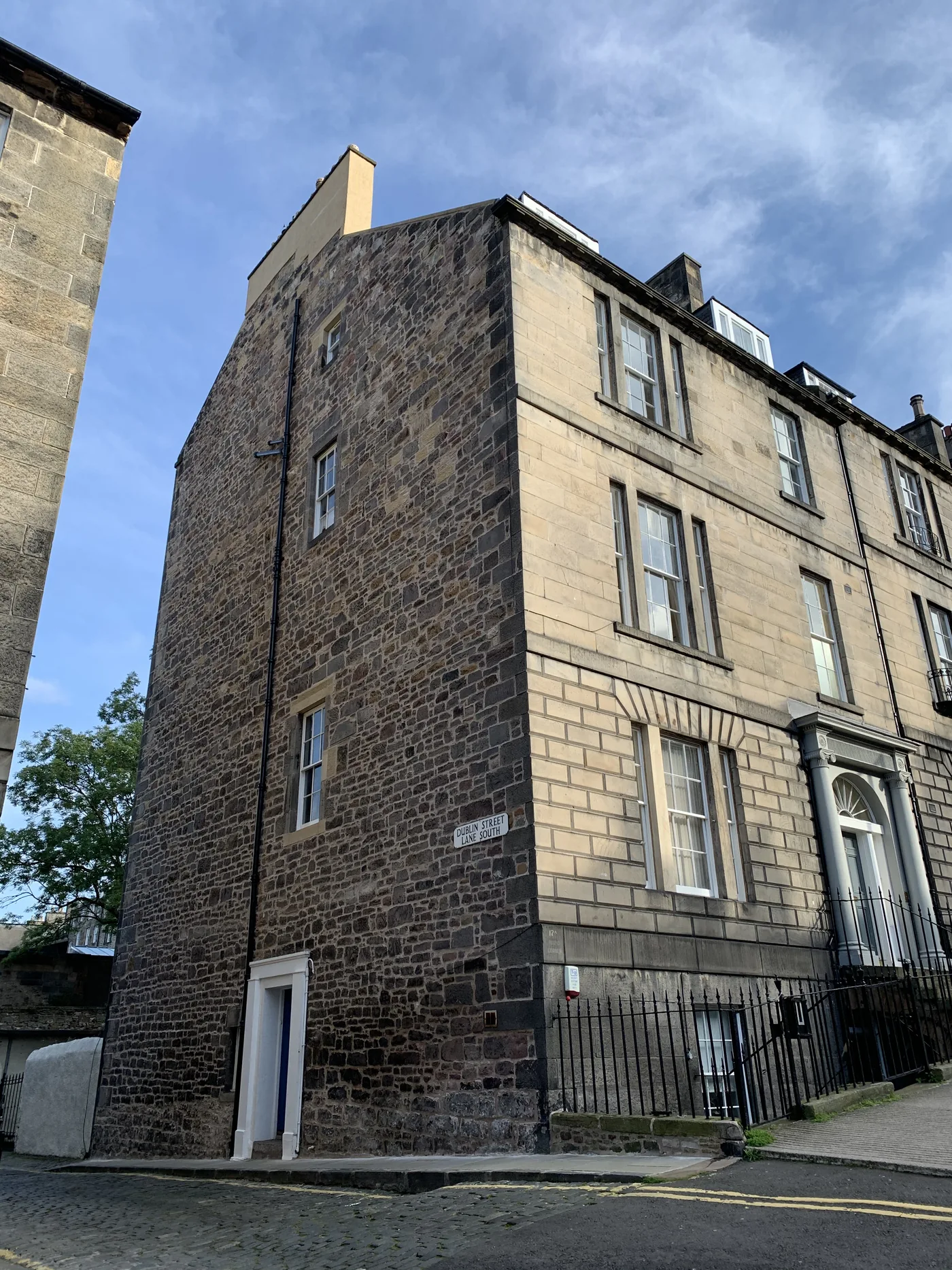
Reviewed by Restorex’s building restoration team
Mortar is part of the moisture-management system
Traditional sandstone walls absorb and release moisture. A suitably specified lime mortar remains comparatively permeable and is normally intended to weather sacrificially before the surrounding stone. This helps evaporation occur through the joints instead of concentrating moisture and salts within vulnerable stone faces.
Hard, dense cement-rich pointing can alter that balance. Where it bridges across soft stone, water may be driven through the masonry units rather than the joints. Repeated wetting, frost and salt movement can then contribute to edge decay, spalling and loss of the stone face.
Correct pointing is more than choosing lime
The existing joints must be examined before work begins. Defective material should be removed carefully to an appropriate depth without widening joints or damaging arrises. Mortar strength, aggregate, colour, texture and joint finish should respond to the masonry and exposure rather than being selected from appearance alone.
Fresh work also needs protection. Rapid drying, heavy rain and frost can prevent proper curing. Programming, damping, protection and aftercare are therefore part of the specification—not optional extras.
A condition-led approach
Not every open-looking joint requires wholesale repointing. Sound historic mortar should be retained where practical, and isolated defects should be distinguished from wider failure. Restorex assesses pointing alongside copes, cornices, gutters and other sources of saturation so the repair addresses the cause as well as the joint.