
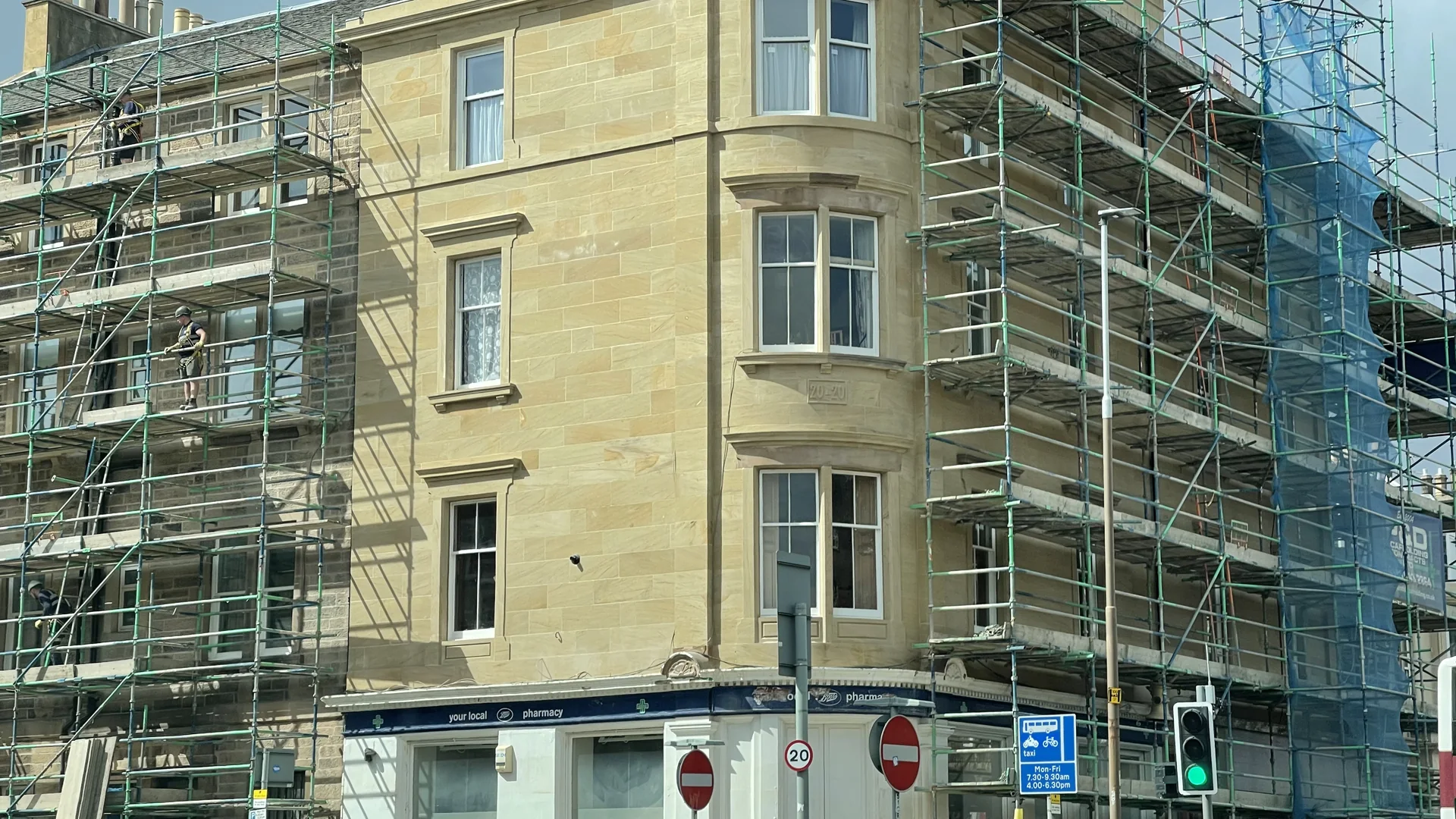
Reviewed by Restorex’s building restoration team
Start with evidence and ownership
A leaking roof, unsafe masonry or failed chimney may affect one flat first but involve common building fabric. The early task is to establish what is defective, what is shared, who is coordinating the owners and whether professional inspection or statutory guidance is required.
Clear photographs, drawings and defect schedules reduce disagreement. They allow owners to see the same information and help the professional team separate urgent safety or weathering work from planned maintenance.
Define one coordinated scope
Stone, slate, leadwork, chimneys, windows and rainwater goods interact. Procuring them as disconnected repairs can leave gaps at junctions and duplicate scaffold costs. A coordinated scope should identify quantities, access, temporary protection, trade sequencing and how unforeseen conditions will be agreed after opening-up.
For occupied tenements, the programme must also address entrances, noise, security, resident communication and daily weathering. These practical arrangements materially affect both cost and delivery.
Funding and approvals
Grant conditions, listed-building requirements and shared-repair procedures vary by project. Owners should obtain current advice from their factor, solicitor, surveyor or the relevant authority rather than relying on a contractor for legal interpretation. Restorex supports that process with buildable scopes, cost information and conservation-led delivery evidence.